Good morning. You’re reading the Up First newsletter. Subscribe here to get it delivered to your inbox, and listen to the Up First podcast for all the news you need to start your day.
Today’s top stories
Even scientists who have tracked the avian influenza for years are confused by its recent spread in dairy cattle populations. “There’s a heap of unknowns right now,” says Richard Webby, a virologist at St Jude Children’s Research Hospital. What we do know is that the first cases of this H5N1 bird flu strain emerged among migratory birds in late 2021, and is now showing up among dairy cows and at a major egg producer in Mississippi. One person who had close contact with cows presumed to be infected with the virus has caught the virus.
Cows lay down a freestall barn after getting milked on the Ted and Megan McAllister dairy farm.
Charlie Neibergall/AP
hide caption
toggle caption
Charlie Neibergall/AP
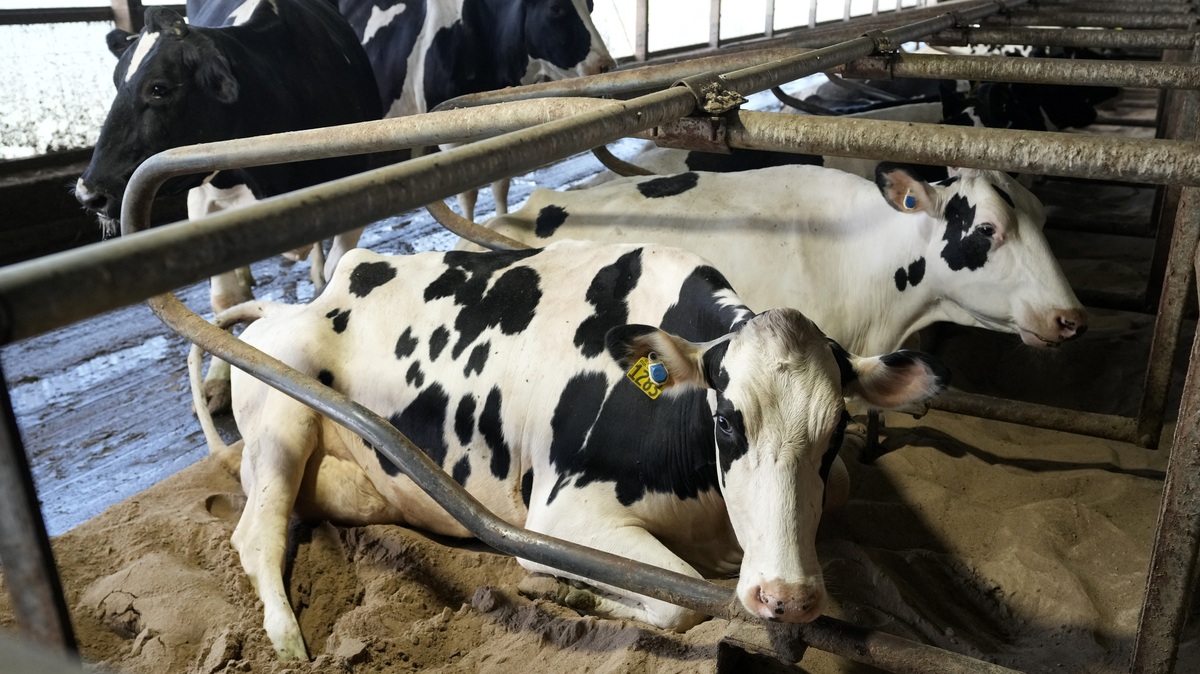
Cows lay down a freestall barn after getting milked on the Ted and Megan McAllister dairy farm.
Charlie Neibergall/AP
- Federal officials and scientists stress the risk to the public remains low, despite reports that the strain is affecting new wild bird species and persisting longer than previous ones. There are no documented cases of human to human transmission, and it’s generally rare for people to catch any type of bird flu. “The good news is this is not a serious problem,” Texas Agriculture Commissioner Sid Miller told NPR.”It’s not going to bankrupt anybody. Cows basically have the flu…