One of the biggest talking points of the last couple of years has been the gap between supply and demand in nearly every industry, from real estate to energy.
Inflation hit 8.6% in May, according to the latest CPI report and gas prices spiked to a record average of $5 and over across all U.S. states for the first time as the cost of an oil barrel climbs to $120. Broken supply chains have caused catastrophic supply and demand issues in nearly every sector of the economy, giving us the perfect storm of inflation.
However, despite the outlook, AirDNA’s May Review indicated that supply, at least in the short-term rental market, might finally be catching up with demand.
Occupancy Falls By 8.6% As 84,000 Listings Are Added
In data generated by both Airbnb and VRBO, 84,000 new short-term rental listings were added to the market, creating a 57,000 net increase after removing closed listings.
In total, there are roughly 1.3 million listings available for rent in the United States, which is up nearly 25% year over year. This marks a record high for total available listings in the U.S.
While demand has been extremely high, especially as some reports suggest that this will be a hectic traveling summer, occupancy fell to 60.2% in May.
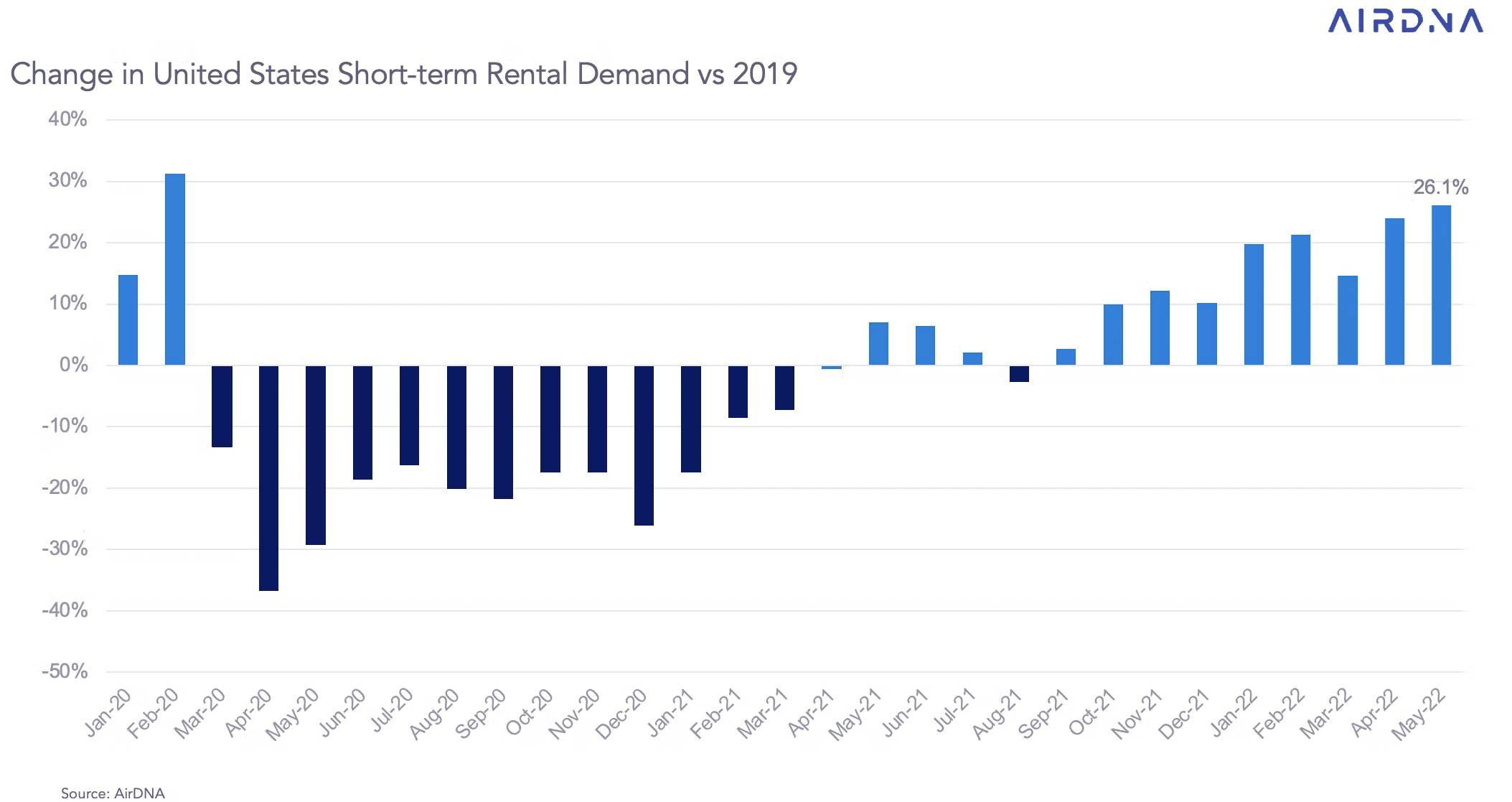
While there doesn’t seem to be any worrisome signs to keep an eye on just yet, falling occupancy rates aren’t exactly an STR investor’s favorite statistic. Yes, listings were added month over month, but if demand is as high as it is, then you wouldn’t expect a sharp near 10% decline in occupancy heading into the busy season. Instead, occupancy is mirroring 2019s numbers more than 2021, for better or worse.
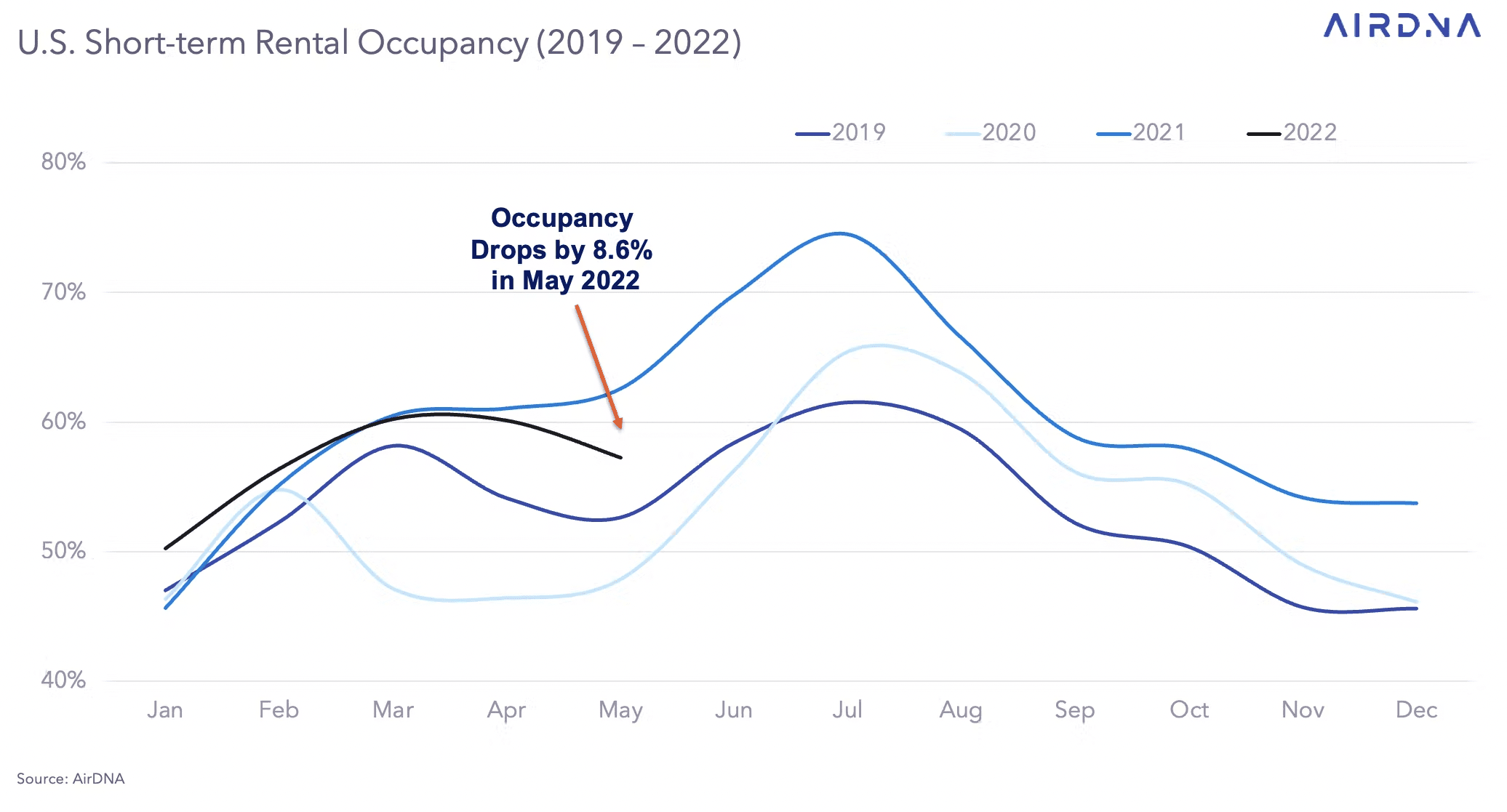
The fact of the matter is that supply outpaced demand in the short-term rental market, despite this summer supposedly being the season of “revenge travel,” as some pundits have labeled it.
But when we…