Writer and health educator Marni Sommer is co-author of A Girl’s Guide to Puberty & Periods, which aims to help young people ages 9 to 14 understand the changes that happen in puberty and what to expect when.
Grow & Know/Screenshot by NPR
hide caption
toggle caption
Grow & Know/Screenshot by NPR
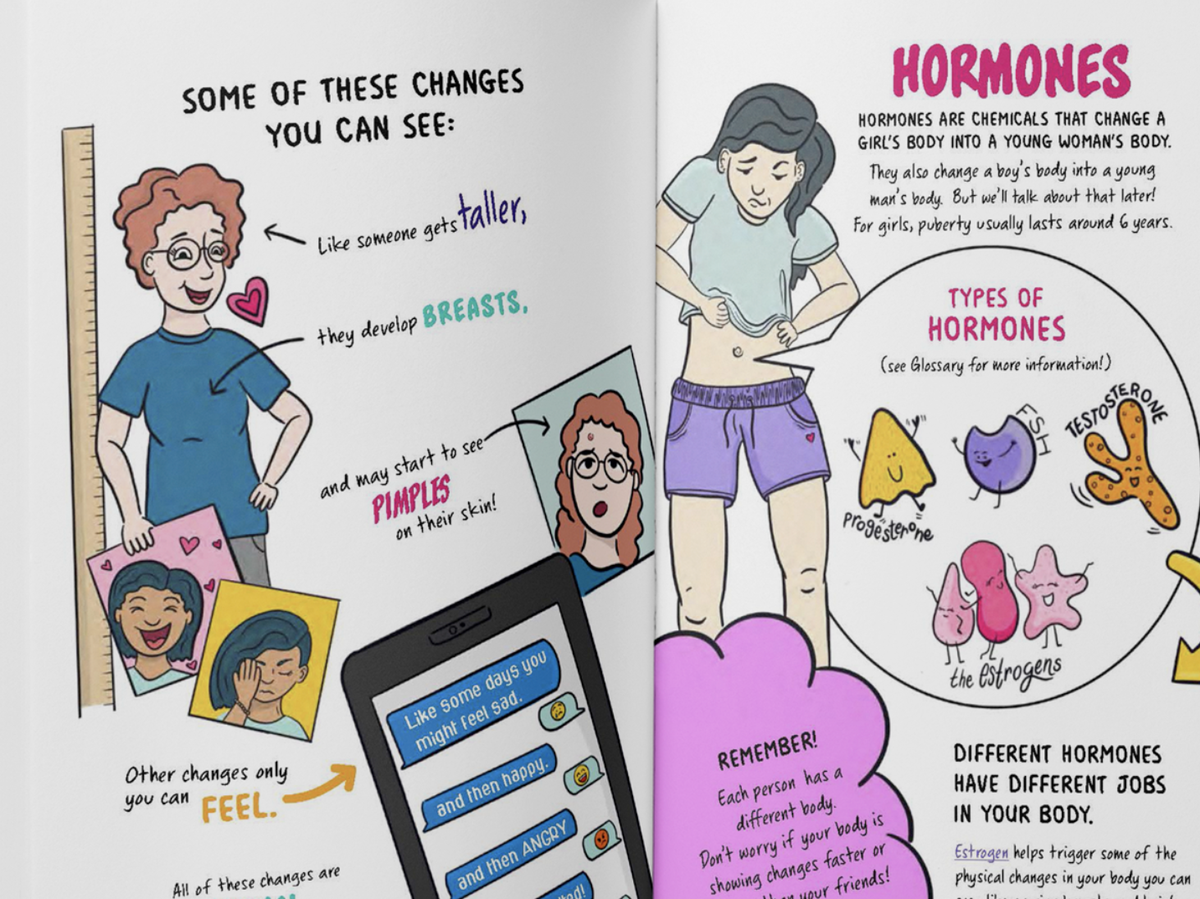
Writer and health educator Marni Sommer is co-author of A Girl’s Guide to Puberty & Periods, which aims to help young people ages 9 to 14 understand the changes that happen in puberty and what to expect when.
Grow & Know/Screenshot by NPR
One thing few people have been talking about since Roe v. Wade was overturned is how abortion restrictions will affect young girls across the United States.
Around the time of their first period, many young people learn the basic mechanics of managing their periods, such as how to put on a pad or tampon and that it happens once a month. Traditionally they might also receive some admonishment to keep their period hidden. Young people may get information about menstruation from a family member, friends or a teacher, or by searching on the internet.
But often it is only later that they learn and truly understand the more complex details about the menstrual cycle. This includes guidance around regular and irregular patterns and when to seek medical care for any shifts in timing, duration or the overall experience, including the severity of menstrual pain or heavy bleeding. These conversations also have clear implications for ovulation and pregnancy…