Tree branches laden with the changing, multi-colored leaves of fall are seen below a blue sky filled with white, fluffy clouds in Portland, Ore., Wednesday, Sept. 22, 2010. Today is the fall equinox and first day of Autumn, when the sun rises directly in the east and sets directly in the west.
Don Ryan/ASSOCIATED PRESS
hide caption
toggle caption
Don Ryan/ASSOCIATED PRESS
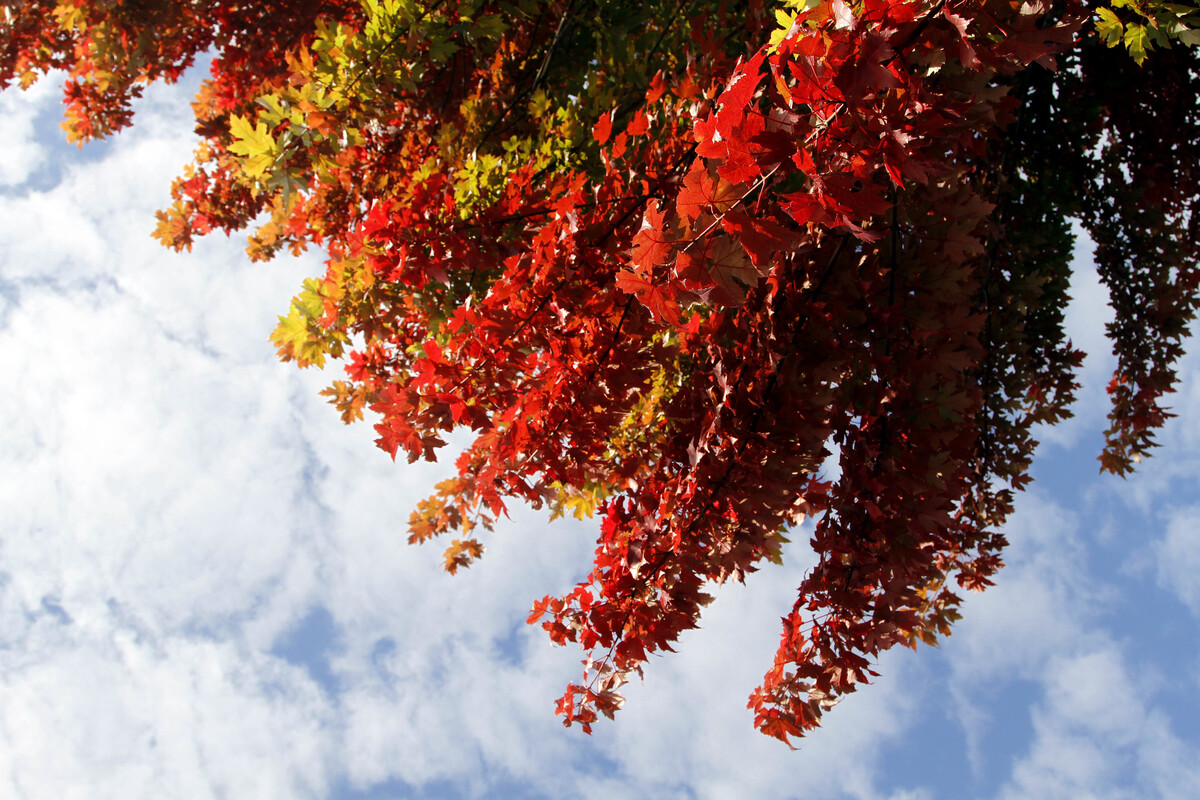
Tree branches laden with the changing, multi-colored leaves of fall are seen below a blue sky filled with white, fluffy clouds in Portland, Ore., Wednesday, Sept. 22, 2010. Today is the fall equinox and first day of Autumn, when the sun rises directly in the east and sets directly in the west.
Don Ryan/ASSOCIATED PRESS
Fall starts at 9 p.m. Eastern Thursday, a day officially known as the autumn equinox.
Both equinoxes and solstices only happen twice a year — the first days of fall and spring are equinoxes, while the first days of summer and winter are solstices.
How are they different?
What is an equinox?
On the day of an equinox, the Earth is tilting neither toward or away from the sun, and therefore receives almost an equal amount of daylight and darkness, according to the National Weather Service.

At places along the equator, the sun is directly overhead at about noon on these days. Day and night appear to be equal due to the bending of the sun’s rays, which makes the sun appear above the horizon when it is actually…