5. Record High Inflation
To exacerbate the issue, we’re seeing inflation cause rent prices to climb even further in 2022 than anticipated in Boston. Rising prices for: diesel gas, labor, and materials has increased the cost of maintenance for property owners. Whenever that happens, the costs will always trickle down to the renter, and we’re seeing it in the form of rent hikes in 2022. There’s no industry that escapes bad fiscal and energy policy, and Boston’s rental market is no exception. As a result, the average rent price is up +7.28% year-over-year.
6. Record High Energy Costs
Rising energy prices are driving up the cost of development. The construction industry relies on large machinery to transport and install heavy building materials. Large freight vehicles and tractor-trailers run on diesel fuel, so when energy costs soar, so does the cost of manufacturing, transporting and installing materials. You are not bringing steel beams to a construction site on a Prius. For the construction industry to be able to pencil a deal to make it work – high energy and bad fiscal policy needs to be taken into account. While the consumer price index is up 8.6% year-over-year, the producer price index for construction materials is up 53.81% over the last two years. Higher cost of building materials means higher cost of repairs for property owners. Those additional costs will get passed down to the renter.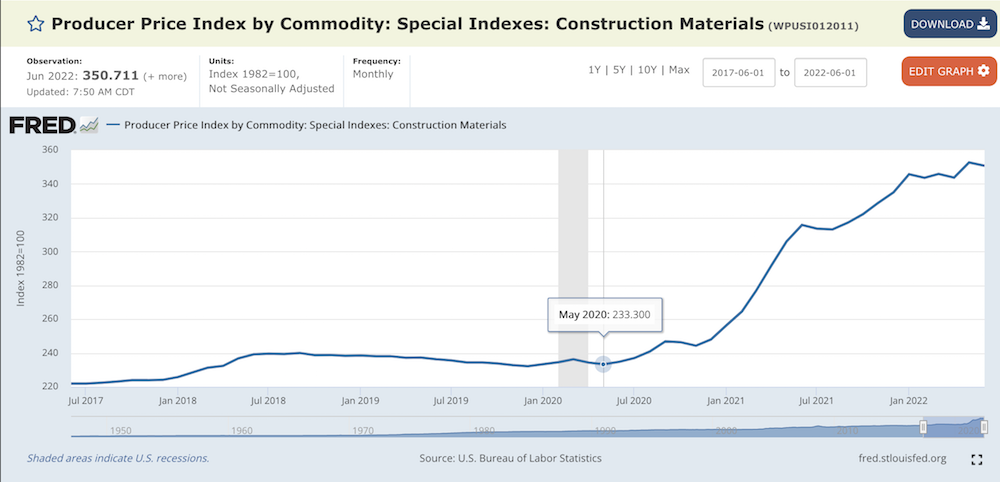
7. Development Disruptions
We are still experiencing a labor shortage coming out of the pandemic. The labor participation rate has yet to catch up to pre-pandemic levels, and development projects in Boston have been slowed down as a result. This adds more costs to developers in the form of higher labor prices and carrying costs of paying taxes, utilities, and loans during construction. Higher costs for developers means higher costs for buyers and renters. We need to get more people back to work and off the sidelines. Numerous…