An asylum-seeking migrant woman from Peru in a wheelchair is escorted through the border wall to be processed by U.S. Customs and Border Protection after crossing the Rio Grande into the United States in El Paso, Texas, on Dec. 21.
Jim Urquhart for NPR
hide caption
toggle caption
Jim Urquhart for NPR
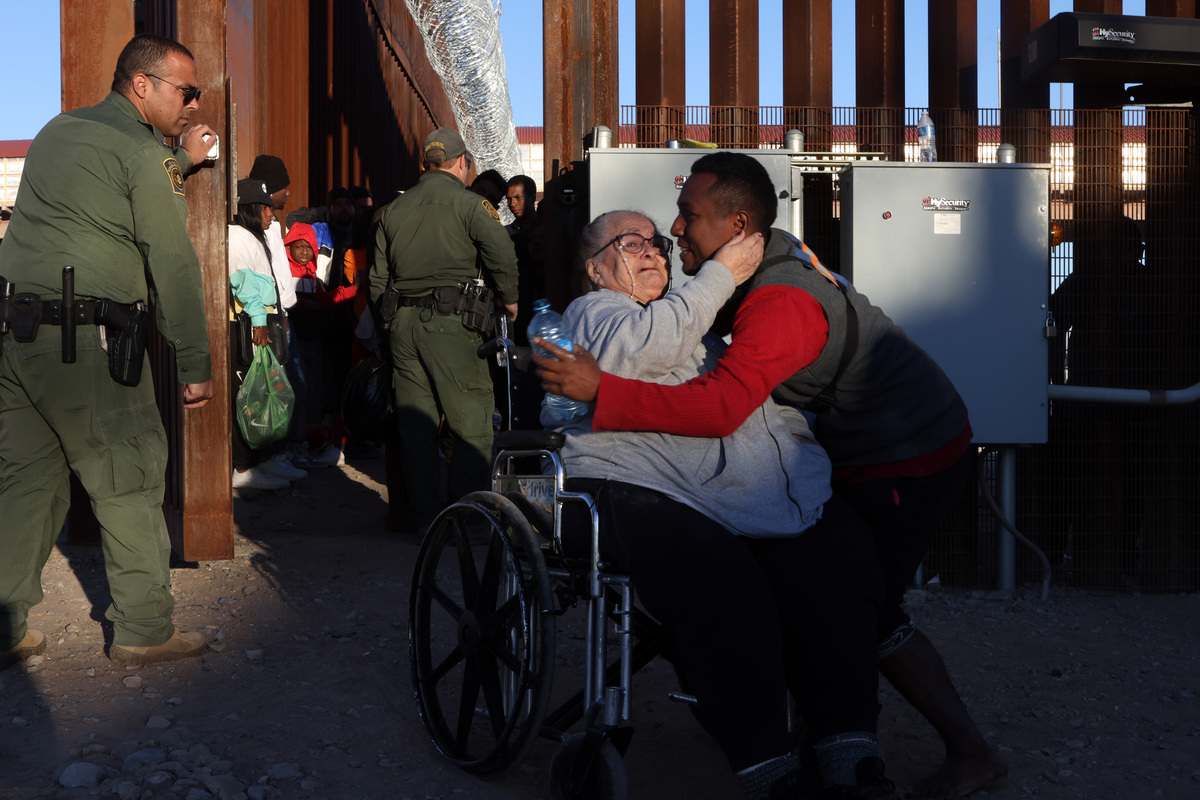
An asylum-seeking migrant woman from Peru in a wheelchair is escorted through the border wall to be processed by U.S. Customs and Border Protection after crossing the Rio Grande into the United States in El Paso, Texas, on Dec. 21.
Jim Urquhart for NPR
In the past two weeks, the Texas National Guard has increased its militarized footprint with Humvees, razor wire and personnel stationed with rifles along the border with Mexico.
Migrants have traveled hundreds, if not thousands, of miles to the El Paso/Juárez border in a search of a better life. Some were carrying their children in their arms and on their backs.
There are migrants on the streets and around the churches of El Paso’s old downtown and in other border towns. The vast majority are turning themselves over to U.S. Customs and Border Protection seeking asylum.
On Tuesday, the U.S. Supreme Court blocked the Biden administration’s attempt to lift the pandemic border restrictions, known as Title 42, and agreed to decide in its February argument session. The restriction allows immigration authorities to quickly expel many migrants without allowing them to apply for asylum while in the U.S.