We all know that one person who bought a property for a price that seems unfathomably cheap by today’s standards, such as $50,000, and it’s now worth $350,000. It’s crazy to think that just 50 years ago, median home prices were right around $24,000.
Today, the median home price is over $456,000, according to the Department of Housing and Urban Development. In 50 years, property prices have increased by nearly 14x.

This is enough to get anyone to buy real estate and to become wealthy, right? Well, not exactly. The numbers I’ve shown you so far are nominal home prices, meaning they have not been adjusted for inflation. But as investors, we want to understand how our money is growing relative to our spending power, and for that, we need to use real housing prices.
Adjusting Home Prices for Inflation
In this context, “real” just means “inflation-adjusted.” When you adjust real estate prices for inflation, the growth looks much less impressive. Property values are still going up but in a much less dramatic way.
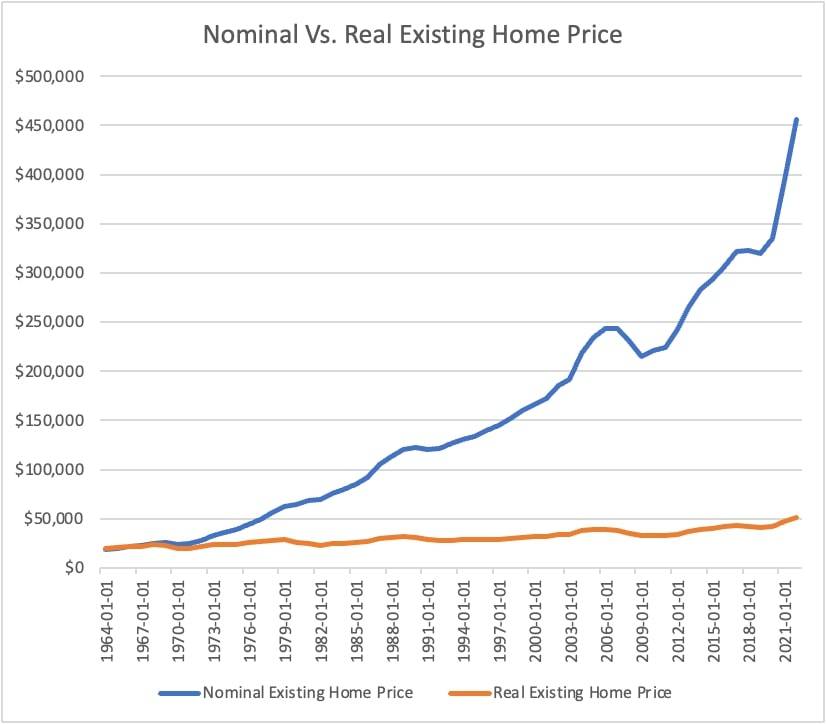
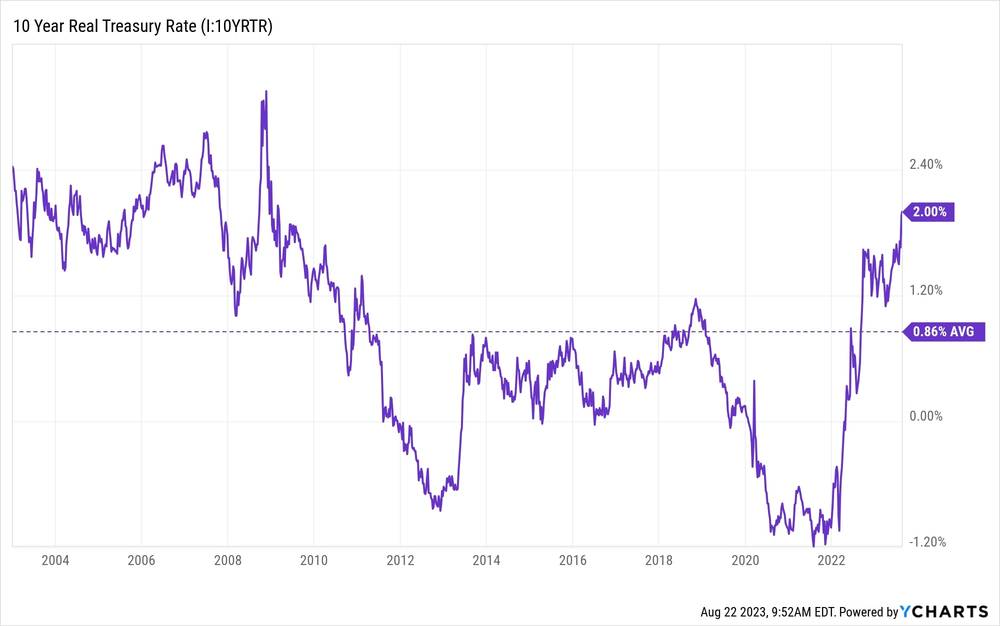
Despite the impressive-looking run-up in housing prices over the last 50 years, the average real growth rate of property values is just 1.8%. Getting 1.8% on your money above inflation is not bad, but it’s not great either. Consider the fact that Over the last 20 years, the real yield on 10-year U.S. Treasuries is 0.86%. This means you could do pretty much nothing with your money and get relatively close to the real growth rate of property values.
Of course, this simple analysis of home prices doesn’t paint the full picture of returns that you get from investing in real estate. It doesn’t factor in leverage, amortization, cash flow, value-add, or many of the tax benefits that come from real estate investing.
Price Growth is Not as Important as We’re Led to Believe
To…